
When a dog doesn't want to be touched.

Not all dogs enjoy physical contact. And learning to respect that is also part of living alongside them.
by Pascale Saravelli, canine educator and co-director at Social Dogs Mallorca.

Some dogs always seem to be looking for contact. They come over, rest their head on our legs, lie down beside us and enjoy a good session of cuddles. And then there are others who prefer to keep a certain distance.
Perhaps they move away when we try to stroke them. Maybe they turn their head, lick their lips, yawn or become very still when someone approaches.
Sometimes they even growl.And then we hear a phrase that comes up again and again:
"But I'm only stroking him."
And that is precisely the point. Just because we want to touch a dog doesn't mean the dog wants to be touched.
Physical contact is not universally enjoyable
Dogs have individual preferences. Some enjoy being stroked, others tolerate it, and some find it uncomfortable, especially when it comes from people they don't know.
How, where and when we touch them also makes a huge difference. A hand reaching directly towards the head can feel very different from a calm, gentle touch from the side. A dog that is resting may not want interaction. And a dog that is frightened may feel even more uncomfortable if someone tries to hold them.
So it is not enough to ask: "Is this a good dog?" The question should be: "Is the dog comfortable with this interaction?"
They were already communicating before the growl
One of the most common problems is that we wait until a dog growls before recognising that something is wrong.
But a growl rarely appears out of nowhere. There may have been much subtler signals beforehand: turning their head away, avoiding eye contact, licking their lips, yawning, trying to move away, becoming still or showing tension in their body.
If we ignore these signals and continue approaching, the dog may learn that their first attempts at communication don't work. And they may then increase the intensity of their response.
That is why a growl should not automatically be interpreted as "aggression". It is a form of communication telling us that the dog needs the interaction to stop or needs more distance.
What if it's our own dog?
This is where things can become more difficult.
We may think:"It's my dog. I should be able to touch him."But living with a dog does not mean having the right to constantly invade their personal space.

In a relationship based on trust, we can also learn to respect their preferences.
This does not mean that we can never handle them.
There are times when we need to put on a harness, clean their paws, brush them, administer medication or take them to the vet.
That is precisely why it is so important to gradually teach them to accept these types of handling, associating them with positive experiences and respecting their signals throughout the process.
It is not about forcing them to "put up with it".
It is about teaching them that our hands do not represent a threat.
And what about children?
This is especially important when there are children at home.
A dog that is sleeping does not need to be woken up for a hug.
A dog that has hidden does not need to be pulled out from under a table.
And a dog that moves away when someone tries to stroke them is probably giving us information that we need to listen to.
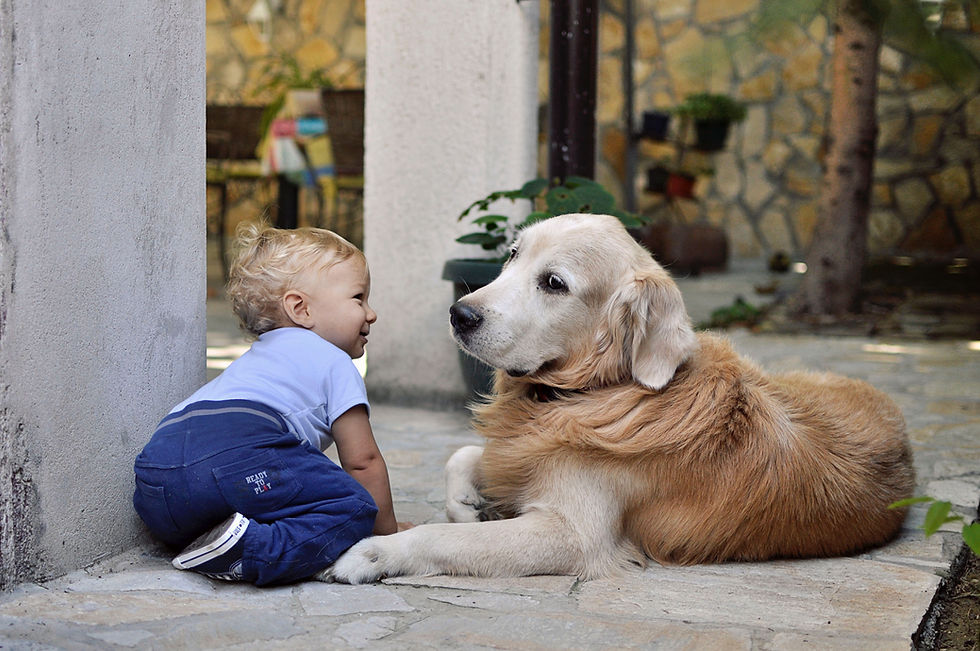
Children need to learn that a dog is not a toy and that they also have the right to say "no".
The responsibility, of course, always lies with the adult: we cannot expect a child to correctly interpret every signal from a dog without first teaching them how to do so.
If you live in Calvià...
In a municipality where we share streets, parks, beaches and public spaces with many dogs, it is easy to come across one we don't know.
Before approaching, we can do something very simple: ask the handler and observe the dog. And if the dog doesn't want to come over, that's okay. Not every dog has to say hello. Not every dog has to allow themselves to be stroked. And not every dog has to enjoy human contact.
Respecting that choice is also a form of welfare.
Did you know...?
A dog can remain completely still while we are stroking them and still not be enjoying the interaction. A lack of movement does not necessarily mean that they are comfortable. In some cases, becoming still can be a response to a situation that causes discomfort or stress.
So when we stroke a dog, we shouldn't only pay attention to whether they "allow it".
We should observe how they are responding.
Because true trust does not mean that a dog allows us to do anything we want.
It means they know that when they communicate that something makes them uncomfortable, we will listen.


Comments